Availability: 9 in stock
Floraux
for oboe, clarinet, and bassoon
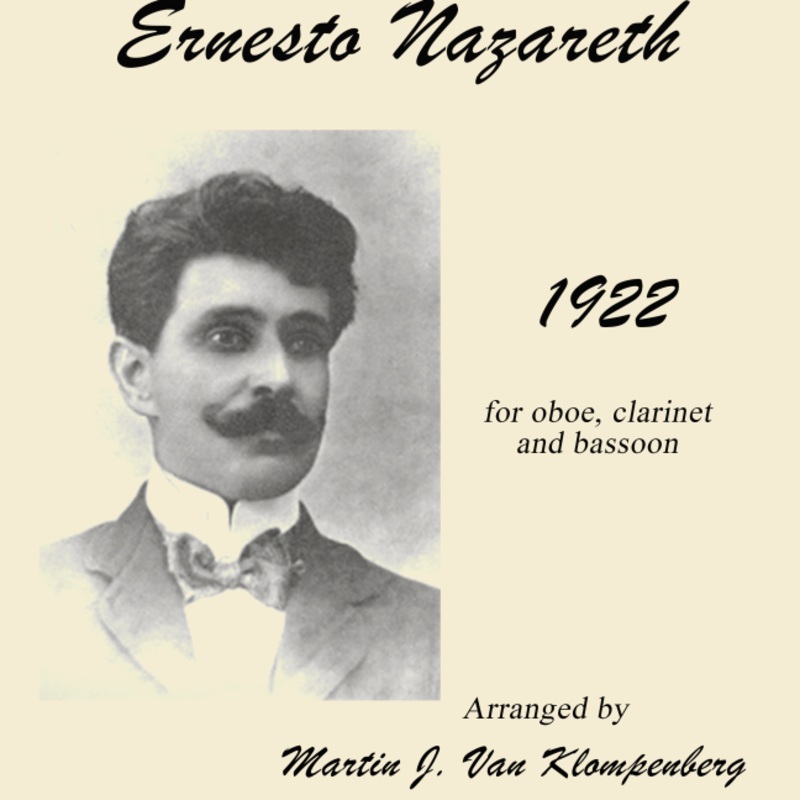
by Ernesto Nazareth
arranged by Martin J. Van Klompenberg- American bassoonist andcomposer
ABOUTTHE COMPOSER
Ernesto Julio de Nazareth was a prominent pianist and composer Rio De Janeiro,Brazil. He first began piano lessons as a young child with his mother, Carolina daCunha, and continued his musical education following her death. By the age of
fourteen, Nazareth has published his first original composition and had begunregular performances in Brazil. Throughout his life, he was recognized as aprominent Brazilian educator, composer and performer, presenting many of hisown compositions at performances and recitals.
His output consists of more than two hundred compositions, including nearlyninety Brazilian tangos, as Nazareth referred to them. These works wereprimarily Choros and Lundus but Nazareth wanted his work to be labeled like thehighly popular Argentine tangos of the time. His tangos are heavily influenced by
African rhythms and ragtime, as well as European harmonies.
1922 was written in the same year as its title as a culmination of Nazarethscarnival tangos of the 1910s. Unlike his other works of that year, focused on apotential revolution in Brazil, 1922 is more lighthearted. It may have also beenintended to be a vocal work, but Nazareth never sent the music to his lyricist andthe piece was subsequently reclassified as a tango.